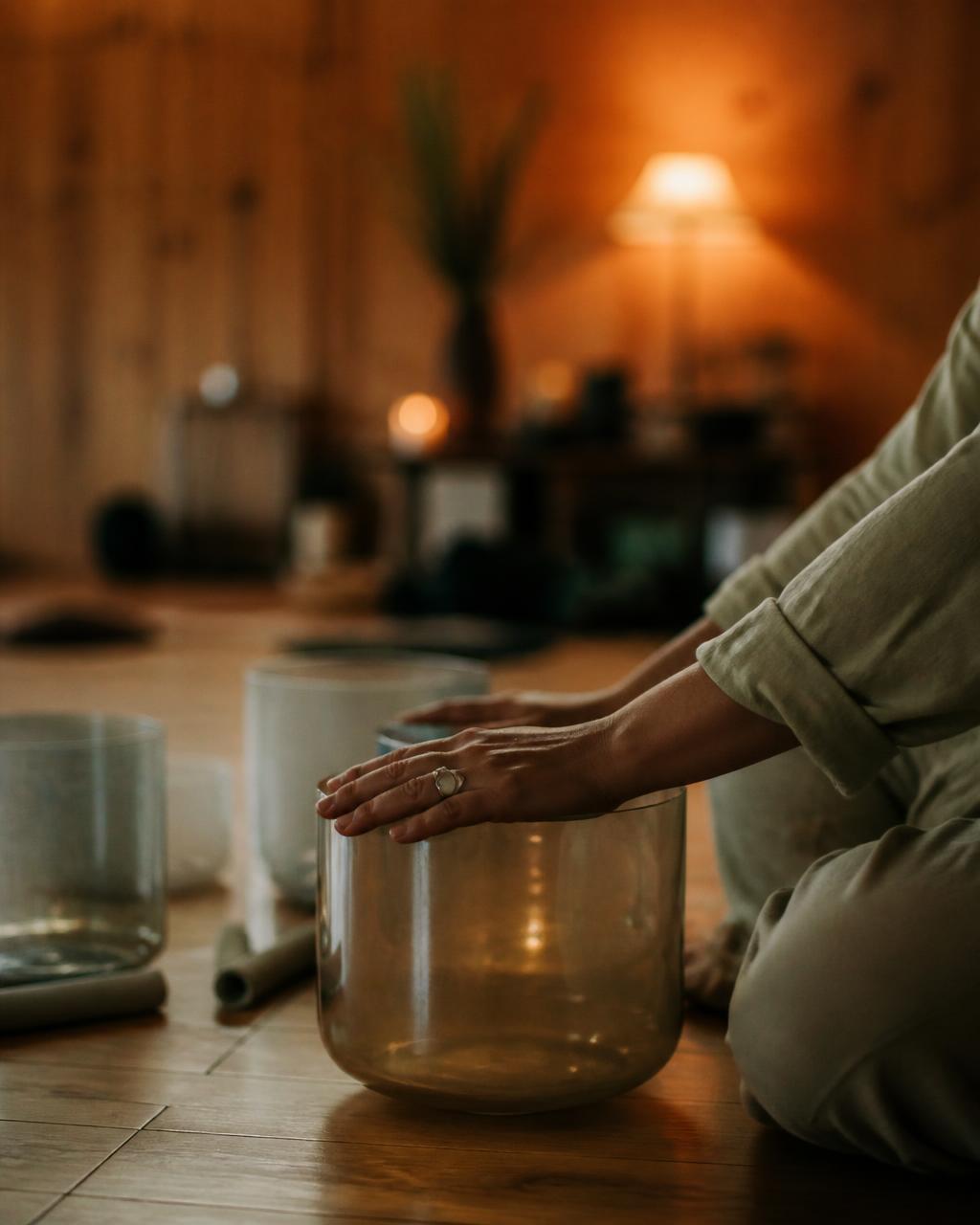
The bowl does not begin when the mallet touches its rim. It begins several minutes earlier, in the subtle agreement a room makes to become a room together.
Someone shifts a cushion. Someone else takes one last look at a phone before turning it face down. The air conditioner clicks off. All of this is part of the practice: not a prelude to the sound, but the first movement of listening.
Listening is a physical act
We often speak of listening as though it happens only in the ears. But sustained sound is felt through the sternum, the floor beneath the hands, and the small muscles around the eyes. A bowl gives us something steady enough to notice how much of the body is involved.
There is no correct experience to reach. Some people feel spacious; others notice restlessness. Some hear a bright overtone, while others feel the low vibration more than they hear it. The invitation is simply to stay close to what is true.
What it means to hold silence
After years of offering sound practices, I have learned not to rush the space after the final tone. This is often the most generous part. The bowl has finished speaking, but the room is still listening.
Holding that silence is not about manufacturing solemnity. It is about trusting that nothing needs to be added. Each person can return at their own pace, carrying whatever surfaced without needing to explain it.
After the sound
Eventually there is movement: fingers stretching, a blanket folded, a shared smile. The ordinary room returns, but perhaps with a little more room inside it. That is the quiet promise of the practice.
We do not leave silence behind when the door opens. We take some part of it into the drive home, the next conversation, the next moment when we remember to listen before we answer.